
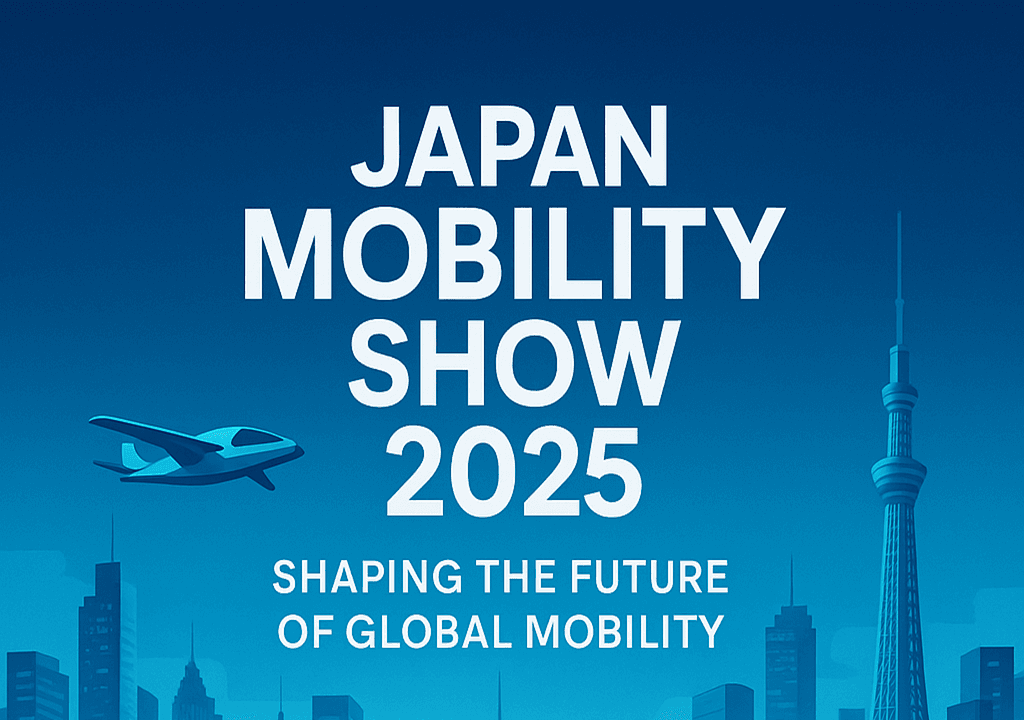
The Japan Mobility Show 2025 is set to become one of the world’s most anticipated automotive and mobility exhibitions. Scheduled to be held from October 30 to November 9, 2025, at Tokyo Big Sight, this event promises to showcase the next generation of mobility — from electric vehicles and autonomous technologies to futuristic mobility solutions that connect land, sea, and air.
Organised by the Japan Automobile Manufacturers Association (JAMA), the Japan Mobility Show (JMS) represents the evolution of the historic Tokyo Motor Show. Unlike traditional auto expos that focused mainly on cars, JMS has widened its scope to include the entire mobility ecosystem covering personal mobility, commercial transport, logistics, robotics, aviation, and smart city innovations.
The Broader Vision of Mobility
The theme of JMS 2025 revolves around “Expanding Possibilities of Mobility.” It highlights how technology, design, and human creativity are redefining how people and goods move. The exhibition is expected to feature more than 400 exhibitors, including major automotive manufacturers, tech companies, and startups from across the globe.
The focus will not only be on vehicles but also on how mobility connects with everyday life. This includes advancements in autonomous driving, electric mobility, hydrogen-powered vehicles, smart transportation systems, and mobility-as-a-service (MaaS).
Key Dates and Participation
- Press Days: October 29–30, 2025
- Public Days: October 31 to November 9, 2025
- Venue: Tokyo Big Sight, Koto City, Tokyo
The event will include various pavilions such as the Mobility Future Zone, Startup Future Factory, and Global Collaboration Zone designed to bring together innovators, manufacturers, and engineers under one roof.
Spotlight on Innovation and Startups
One of the most exciting elements of the Japan Mobility Show 2025 is the Startup Future Factory. Around 150 startups will participate, showcasing innovations in artificial intelligence, electric powertrains, connected mobility, and urban transportation. This platform encourages collaboration between large automotive manufacturers and emerging technology companies to build sustainable mobility solutions for the future.
The event will also highlight Japan’s growing leadership in clean and efficient mobility systems. With global pressure to reduce carbon emissions, JMS 2025 will put a spotlight on carbon-neutral technologies, EV battery recycling, and green energy infrastructure.
Major Automakers and Their Vision
Japanese automakers such as Toyota, Honda, Nissan, and Mazda are expected to make significant announcements during the show. Honda plans to display its futuristic “0 Series” EV lineup, which focuses on minimal design and advanced electric performance. Toyota is likely to showcase hydrogen-powered concept vehicles and autonomous prototypes aimed at the global market.
In addition to domestic players, global manufacturers from Europe and the United States are also expected to participate, presenting a range of concept EVs, hybrid systems, and smart mobility devices. The inclusion of aerial mobility and marine transportation concepts underlines how JMS 2025 views mobility as an interconnected, multi-domain ecosystem.
Why Japan Mobility Show 2025 Matters
For the global mobility industry, JMS 2025 serves as a roadmap for the future of transportation. The event will display how industries are converging from automotive to information technology, energy, and communication systems.
Read More: GST Cut on Small Cars in India: Prices Likely to Drop Soon
For Indian readers, especially those following EV developments and industrial engineering trends, the show offers valuable insights. It provides a glimpse of technologies that could influence India’s own electric mobility and manufacturing strategies. With India’s focus on sustainable transportation, the innovations at JMS 2025 could inspire domestic automakers like Tata Motors, Mahindra, and others to align with global advancements.
Expected Trends at JMS 2025
- Electrification and Hydrogen Mobility: A major portion of the show will be dedicated to EVs, hybrid technology, and fuel-cell vehicles.
- Autonomous and Connected Systems: Automakers will demonstrate AI-based driving assistance, V2X (vehicle-to-everything) communication, and data-integrated mobility platforms.
- Smart Cities and MaaS: JMS will feature concepts that integrate transportation with city infrastructure, promoting seamless mobility experiences.
- Micro and Personal Mobility: Compact e-scooters, foldable e-bikes, and AI-powered personal transporters will highlight the role of individual mobility solutions in modern cities.
- Startup Collaboration: Startups will showcase innovations in battery technology, logistics automation, and fleet management systems, reflecting how entrepreneurship is driving the next phase of mobility.
Impact on India’s Mobility Future
The technologies and partnerships unveiled at Japan Mobility Show 2025 will shape the next decade of transportation worldwide. For India, where electric mobility and manufacturing are key growth areas, JMS 2025 could act as a learning platform for industrial engineers, policymakers, and mobility entrepreneurs.
As global automakers and startups collaborate to design smarter, safer, and cleaner vehicles, India’s mobility ecosystem can adapt these ideas for its local context. Observing the progress made by Japan’s industry giants will help Indian manufacturers benchmark their own EV strategies and explore new business opportunities in shared and intelligent mobility.
