Electric cars are slowly but steadily becoming part of India’s mobility story. While overall EV adoption is rising, the real picture becomes clearer when we look at state-wise penetration of electric cars in FY2025–26. Some states are leading aggressively, while others are still at a very early stage.
What Electric Car Penetration Means
Electric car penetration simply refers to the percentage of electric cars sold compared to total car sales in a state. This helps understand how quickly EVs are replacing petrol and diesel cars.
In FY2025–26, India is still in the early adoption phase for electric cars, but a few states are showing strong momentum thanks to policies, infrastructure, and urban demand.
States Leading in Electric Car Adoption
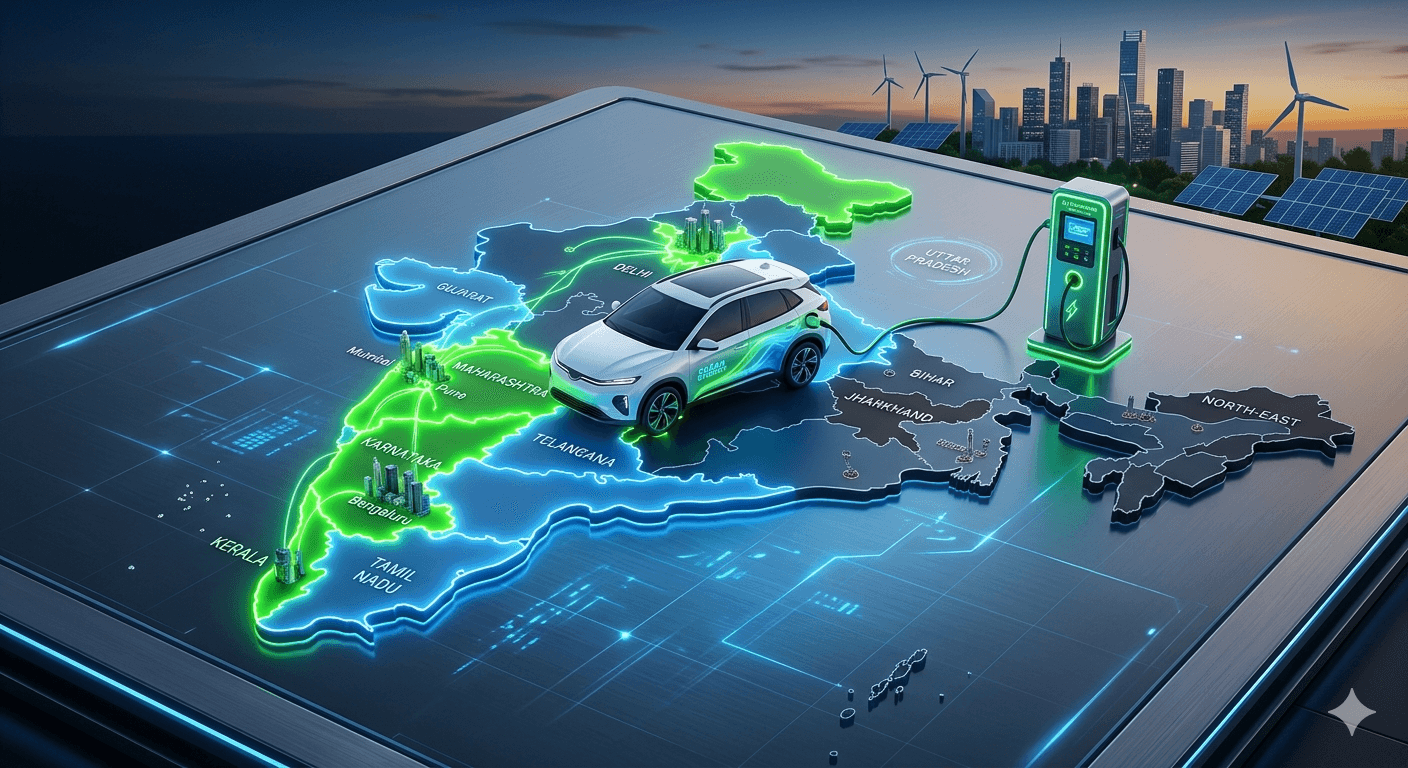
States like Delhi, Kerala, Karnataka, and Maharashtra are among the top performers in electric car penetration.
Delhi continues to dominate due to its aggressive EV policy, strong subsidies, and high fuel costs. The city has created a favorable ecosystem with incentives for buyers and better charging infrastructure.
Kerala has emerged as a surprising leader, driven by high awareness, government support, and increasing urban adoption. The state’s push toward clean mobility is clearly visible in its EV numbers.
Karnataka, especially Bengaluru, plays a major role in EV growth. With a strong tech ecosystem and early adoption mindset, the demand for electric cars is increasing steadily. Availability of charging stations and corporate EV adoption also support growth.
Maharashtra remains a key EV market due to cities like Mumbai and Pune. Government subsidies and rising fuel prices have encouraged buyers to shift toward electric cars.
Mid-Level Performing States
States such as Tamil Nadu, Telangana, Gujarat, and Uttar Pradesh fall into the mid-level category.
Tamil Nadu benefits from being an EV manufacturing hub, but adoption is still catching up compared to production strength. However, urban centers like Chennai are showing promising growth.
Telangana, with Hyderabad as a major city, is seeing gradual adoption. Charging infrastructure and government incentives are improving but still have room to grow.
Gujarat has introduced strong EV policies and incentives, which are helping boost adoption. However, penetration is still moderate compared to leading states.
Uttar Pradesh has a large automobile market, but EV penetration remains limited due to lower awareness and infrastructure challenges in many regions.
States with Low EV Penetration
Several states, including Bihar, Jharkhand, and North-East regions, are still at a very early stage of EV adoption.
The main reasons include lack of charging infrastructure, lower disposable income, and limited awareness about electric vehicles. In these regions, traditional fuel vehicles still dominate the market.
However, as infrastructure expands and EV prices become more competitive, these states are expected to catch up in the coming years.
Key Factors Driving EV Adoption
The variation in electric car penetration across states depends on multiple factors.
Government policies play a major role. States offering subsidies, tax benefits, and incentives are seeing faster adoption.
Charging infrastructure is another critical factor. Cities with better charging networks give buyers more confidence to switch to EVs.
Fuel prices also influence decisions. In cities where petrol and diesel are expensive, electric cars become a more attractive option.
Urbanization and income levels also matter. Metro cities and tech hubs tend to adopt EVs faster compared to rural areas.
Role of Automakers in EV Growth
Automakers are actively pushing EV adoption by launching new models and improving technology.
Companies like Tata Motors, MG Motor, and Mahindra are leading the electric car segment in India. Their focus on affordable EVs, better range, and improved features is helping attract more buyers.
As more models enter the market, customers now have better choices across different price segments.
What This Means for India’s EV Future
The state-wise data clearly shows that India’s EV journey is uneven but progressing. A few states are setting the pace, while others are gradually catching up.
With continuous government support, better infrastructure, and falling battery costs, electric car penetration is expected to grow significantly over the next few years.
India may still be in the early stages, but the direction is clear—electric mobility is no longer just a trend, it is becoming the future of transportation.